Northwest Climate Resilience Collaborative
The goal of this Northwest Climate Resilience Collaborative (NCRC) is to work collaboratively with rural communities to enhance their adaptation and resilience to climate change. Currently, communities across the U.S. Northwest are experiencing the worsening effects of climate change, including unusual climate variability, extreme weather events, severe droughts, irrigation water shortages, and wildfire. These changes and the disruption they bring to our natural and social systems are substantial and affect us all. Despite substantial evidence of these problems, however, many communities, especially those in rural areas, have not yet developed comprehensive climate action plans to respond to these risks. In some cases, this is because they lack the decision-relevant scientific information; in others, it is because they encounter jurisdictional ambiguity or other political obstacles.
Overall, existing structural inequities and poor access to resources exacerbate the challenges rural communities face when trying to make progress on this difficult and multi-dimensional problem. This is the gap that the NCRC is intending to help fill by providing strong relationships between experts and community groups that will be available to all communities in the Pacific Northwest to draw on in the future.
Collaborators: Amy Snover (lead PI), Jennifer Allen, Russell Callender, Aurora Martin, Don Sampson, Gabrielle Roesh-McNally, Meade Krosby, Guillaume Mauger, Crystal Raymond, Jason Vogel, Patricia Hernandez, Chad Kruger, and /Marco Hatch (co-so”CI

Farmer Adaptation to Irrigation Restrictions in Idaho

Climate change and urbanization are increasing the risk of severe drought and the human demand for water from Idaho’s Eastern Snake River Plain Aquifer (ESPA). To address this, state leaders and agricultural water users recently reached an historic agreement – the Managed Aquifer Recharge Settlement – that requires groundwater irrigators to recharge 240,000 acre-feet of water into the aquifer annually until its measurable levels stabilize. This project uses in-depth interviews and mail surveys to examine how farmers are being impacted by this agreement, along with what types of adaptation strategies they are implementing, how successful they are, and the extent to which participating farmers consider the agreement to be fair. Establishing this knowledge supports efforts to manage water in drought-prone western states in a socially, economically and environmentally sustainable manner.
Collaborators: Morey Burnham, Vicken Hillis, Meg du Bray, including students Kathleen Shipley (M.A.), Christa White (B.A), and Selene Ortiz (B.A.)
Ecosystem Services and Idaho’s Farmers
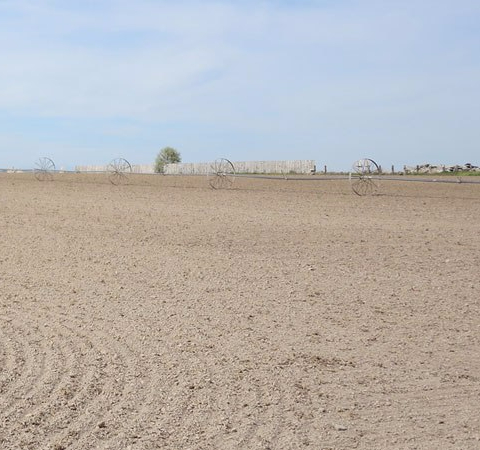
As part of the Idaho EPSCoR MILES (Managing Idaho’s Landscapes for Ecosystem Services) grant, a team of three students and I conducted 30 interviews with farmers in southeastern Idaho to understand how they use, perceive and value ecosystem services, especially water. We also inquired about farmers’ beliefs about climate change, their opinions regarding GMO technology, and their willingness to adopt new conservation practices on their land. Students: Jordan Burke (M.A.), Kathleen Shipley, Tomas Cota.
Read more about the MILES project here: http://miles.isu.edu/ I am also involved in collaborative research to compare perceptions of ecosystem services in Idaho, Oklahoma, and Spain. Read more about the PECS WaterSES here: http://pecswaterses.com/home
Cross-National Variation in Public Opinion about Climate Change
Climate change has been called the biggest collective action problem in human history, but concern for the problem is unevenly distributed throughout the world’s population. This project investigates the individual and country-level factors associated with considering climate change to be a very serious problem. Understanding how and why people form disparate views about environmental challenges is an important first step towards developing comprehensive solutions.
The Effectiveness of U.S. State Policies on Reducing CO2 Emissions from Power Plants
Power plants are largest source of greenhouse gas emissions in the United States. This project evaluates the effectiveness of multiple state policies to reduce CO2 emissions from power plants that were in place before Obama’s Clean Power Plan was implemented. Findings from this research provide useful empirical information about “what works” for national and state policymakers seeking to reduce greenhouse gas emissions through legislation or regulation.
Collaborators: Don Grant, Kelly Bergstrand
 Dr. Katrina Running